

Stump grinding and stump removal
Grinding and mechanical stump removal, including downsizing and splitting on site.
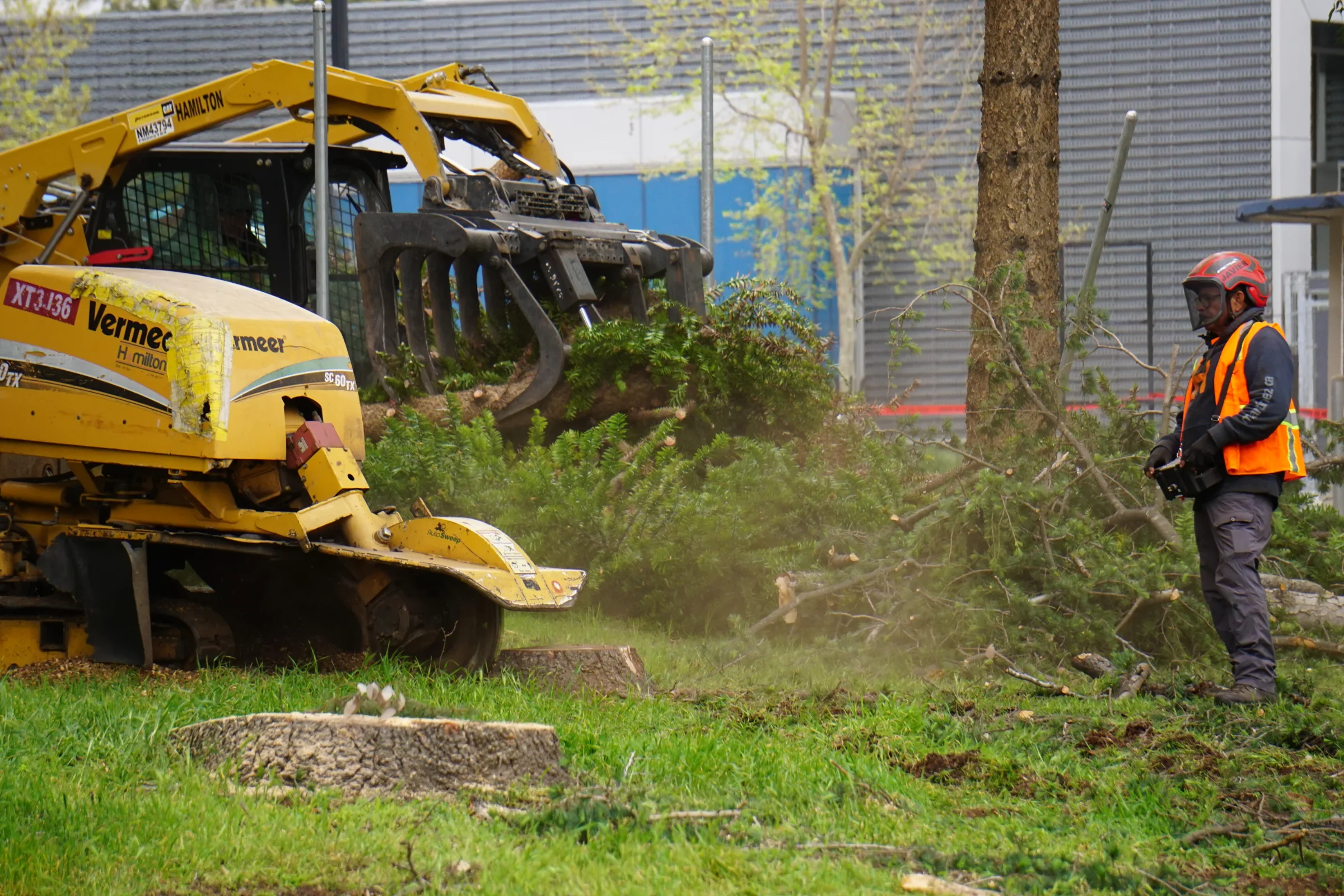
A stump left in the ground is a trip hazard, a mower obstacle and, in time, a fungal fruiting body in the middle of a lawn. What to do about it depends on what the ground is for afterwards.
Grinding takes the stump below grade and turns it into chip. It is quick and it deals with everything you can see. Full mechanical removal takes the stump and the main root plate out, which is what you want if something is going to be built, paved or replanted in the same spot.
Grinding is the lighter of the two on both the ground and the bill: no stump to haul away, a smaller machine, a smaller footprint, and it can usually be done the same day as the removal. Excavating is a separate visit with heavier equipment, and it takes out nearly all the wood — which is what an engineer wants where the ground is going to carry something.
Large stumps and logs can be downsized, sheared or split on site rather than moved whole, which often makes an otherwise awkward removal straightforward.
What stump removal includes
- Grinding to grade, or 2, 6 or more inches below it, agreed before we start
- Full mechanical removal of stump and main root plate where the ground will carry something
- Root chasing to a set radius where the surface roots have to go too
- On-site downsizing, shearing and splitting of large stumps and logs
- Grindings left, spread, hauled off, or the hole backfilled with soil
- Underground utilities located before the grinder starts
Stump removal: common questions
- Grinding or full removal — which do I need?
- Grinding is enough for lawn, planting beds and general tidy-up. Choose full removal when something structural is going in the same place: a foundation, a post, paving, or a replacement tree that needs the root space.
- How deep does grinding go?
- As deep as the job needs, and it is worth saying which. To grade suits turf; 2 inches below is what we use where something shallow may be buried; 6 inches below is the usual choice and takes the bulk of the stump. Most stumps only run 10 to 12 inches below grade, and the large machines reach about 14, so specifying more than 12 is usually money for nothing.
- What about buried utilities?
- Public utilities are located and marked before anything is ground or dug, which is a call placed a few days ahead. Private lines are the ones people forget — irrigation, low-voltage lighting, a run out to a shed — and those are the owner's to mark. Where they are unknown we trace what we can from valves, meters and where lines enter the building, and keep the depth and radius inside what is safe.
- What happens to the grindings?
- Your choice. We can haul them away, or rake them back into the void, which is the cheaper option and works well if you are mulching the bed anyway. Grindings are not soil, so they should not be used as backfill under anything structural.
Related services
- Tree removal
Full removal, including mechanical removal and crane work where access or size calls for it.
- Land clearing
Lot and parcel clearing, with large-scale wood grinding and haul-off.
- Hauling & disposal
Log, chip and brush hauling, with green-waste recycling.
- Mulch manufacturing
Mulch manufacturing, screening and coloring from processed material.
Our sister companies
Two companies behind the work: one turns what we cut into mulch, the other keeps our trucks and equipment running.
Produces our mulch
EcoMulch
Makes mulch from local tree work, ours included, and sells it with soil, compost and rock, for pickup in Martinez or delivery to your driveway.
Visit ecomulch.org (opens in a new tab)Maintains and repairs our fleet
Rex Mechanical
Heavy equipment repair, welding, hydraulics and fabrication, in its shop in Concord or on site across Northern California.
Visit rex-mechanical.com (opens in a new tab)
Talk to someone about your stump removal
Estimates are free. Tell us what you’re looking at and we’ll come and have a look.